


Personal care communities serve senior citizens with a range of services. They help them in daily living and health management activities. The quantity of help given to them is referred to as “levels of care”. These levels are categorized according to the assistance requirement.
The person’s capacity to carry out activities of daily living on their own, including eating, dressing, grooming, bathing, moving around, and managing medications, is one of them.
When selecting a personal care community for yourself or a loved one, it is essential to understand the levels of care. It is easier to ask relevant inquiries during community tours and to explore living possibilities with administrators when one is aware of the individual care needs. It gives families peace of mind and guarantees that the chosen senior living facility can sufficiently meet these needs by getting the required care.
Differences in Level of care between Communities
Usually ranging from one to five levels, degrees of care can differ greatly between personal care communities. Every level offers extra assistance and care, enabling individuals to age in place for extended periods of time by modifying the care given as their needs vary.
A community with five levels of care, for instance, might provide more customized support and flexibility than one with just three, enabling more accurate matching of services to members’ changing requirements. In order to ensure that the community selected meets the resident’s present and future needs and fosters a stable and encouraging living environment, this requires careful study.
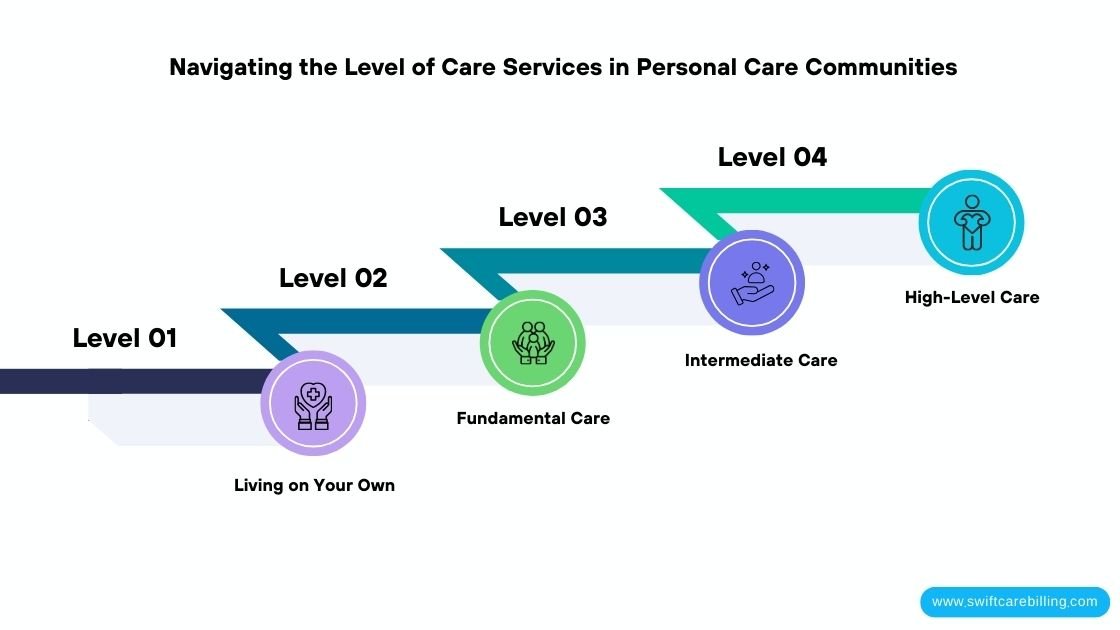
Level 1: Living on Your Own
Seniors who are mostly self-sufficient but prefer the convenience and social opportunities of a communal setting are the target audience for level 1 care in a personal care community.
At this stage, residents can continue to be independent since they need little help with everyday tasks. They gain by having access to a variety of community facilities, including places to eat, social events, and transportation. For people who like living independently in their own room but value the extra security and company that come with being a member of a supportive community, this level is perfect.
Level 2: Fundamental Care
For seniors who require some assistance with everyday duties but are still able to maintain some degree of independence, this level is perfect that ensures residents are well-supported in their personal care routines by providing assistance with activities of daily living like dressing, grooming, and bathing.
Residents also get housekeeping, laundry, and medication management services. Seniors who need assistance on a regular basis but still want to maintain their freedom can benefit from this level of care, which strikes a balance between support and independence.
Level 3: Intermediate Care
For individuals with more complicated medical needs, Intermediate care in a personal care community offers greater support and more thorough help with activities of daily living (ADLs). At this level, residents receive routine nursing care and health monitoring, guaranteeing that staff members swiftly handle any changes in their health status.
Another essential element is coordinating regular medical care with healthcare providers, which makes it easier to monitor the residents’ general health. This higher level of care strikes a balance between freedom and the required care, making it perfect for residents who need substantial help but do not require ongoing medical supervision.
Level 4: High-Level Care
For residents with serious health issues, high level care level provides advanced support and high-level assistance. This level offers residents and their families peace of mind with round-the-clock nurse care and supervision. For people with severe mobility problems, dementia, or chronic illnesses, specialized care is available to ensure their unique needs are expertly fulfilled. Palliative care and end-of-life assistance are also essential components of Level 4 care, with a focus on the dignity and comfort of residents in their last stages of life. People who need ongoing care and all-encompassing medical attention are best suited for this high level of care, which guarantees they receive all the assistance possible.
Choosing the Appropriate Care Level
Carers, medical professionals, and comprehensive evaluations must work together to determine the appropriate amount of personal care for a loved one. In order to assess the senior’s physical and mental health, including mobility, fine motor skills, medical issues, and more, a healthcare expert usually administers a needs assessment test. This evaluation can be conducted in a number of locations, including a neighborhood tour, a hospital, or the senior’s home. Typically, family members or carers are allowed to see the procedure. The information gathered from these evaluations is essential for creating a customized senior care plan that guarantees the resident’s demands are sufficiently satisfied.
Making informed decisions and guaranteeing that your loved one continues to receive the proper support depend on your understanding of the various levels of care. Families can ask the appropriate questions during community visits and conversations with administrators if they are aware of what each level comprises. Additionally, it helps foresee future needs, facilitating a more seamless transfer as the resident’s needs change. Families may promote their loved ones’ health, independence, and quality of life in the greatest possible setting by being informed and making sure they receive comprehensive and ongoing care.
Frequently Asked Questions
What are levels of care?
Personal care support can range from basic assistance with everyday duties to sophisticated, hands-on medical care that is customized to meet each person’s needs. Different levels of care are provided by communities; higher levels denote more extensive help. Families can choose the best community and degree of care for their loved ones with the aid of needs evaluations and research.
Which three stages of caregiving are there?
The functional stage, interpersonal stage, and intrapersonal level are the three stages of caregiving. Every stage has its own set of difficulties and has a big influence on both carers and care users.
Stage of Function
During the functional stage, caretakers oversee day-to-day tasks including scheduling doctor’s visits, giving medication, and making sure the house is safe. This degree of responsibility is essential, but if care takers don’t discover healthy coping mechanisms, it can cause serious stress and burnout.
Stage of Interpersonal
The interpersonal stage then concentrates on the growing bonds between caretaker and the people they look after. Conventional roles necessitating care takers to manage a complicated range of emotions that may result from shifting friendships or family dynamics. It is important for caretakers to carefully control these emotional reactions because this time can elicit feelings of affection, frustration, and obligation.
Level of Intrapersonality
Finally, the intrapersonal level explores the psychological and emotional requirements of caretakers. It highlights the significance of taking care of oneself, establishing sound boundaries, and appropriately dealing with any guilt that may arise. Knowing this level is crucial because caretakers who put their own health first are better able to support the people they look after.
The caregiving experience can be improved by identifying and addressing these stages, which will boost carer health as well as improve the quality of care.
Who is eligible for home health care services?
People who have trouble leaving the house on their own or that it is not a good idea for them to leave the house because of their health are eligible for home health care services. A physician or other healthcare professional must assess the patient in person, certify that services are necessary, and develop a care plan. Physical therapy, occupational therapy, and skilled nursing care are all covered by Medicare. People must employ a home health agency that has received Medicare certification in order to receive these benefits. Additionally, home health aide services are only reimbursed if the person is receiving qualified, professional treatment at the same time.
What Effects Do Home Healthcare Services Have on Seniors’ Quality of Life?
Seniors’ quality of life is greatly improved by the availability of these home care services. By helping with everyday chores, non-medical home care promotes independence and lets seniors remain in their comfortable surroundings. In the meantime, by providing specialized assistance at home, home health care lessens the strain of medical management. Lastly, private duty nursing helps seniors and their families feel more at ease by guaranteeing that those with complicated medical conditions receive individualized and focused care.
If you want to get level of care services, Schedule a meeting today.