Expert Dermatology Billing Services

Dermatology practices face billing challenges that no other specialty deals with. One week a claim is denied because a JW modifier was missing on a biologic. The next week an audit letter arrives because a cosmetic procedure was accidentally sent to insurance. Revenue slips away not because your clinicians are doing anything wrong, but because dermatology coding rules change constantly and payers watch this specialty closely.
At SwiftCare Billing, we provide Dermatology Billing Services built specifically for skin care practices. We handle everything from patient check-in to final payment posting so your front desk and providers can focus on patient care while we protect the financial health of your practice. Our team works inside your EHR, follows your workflows, and reports back with numbers you can actually use to make decisions.

Where Dermatology Billing Loses Money
Before the Claim Leaves Your Office

Most revenue loss in dermatology does not happen after a denial. It happens during documentation, coding, and charge entry. Because dermatology mixes medical, surgical, and cosmetic services, the margin for error is small and the cost of mistakes is high.

The Six Revenue Leaks We Fix First

Biopsy technique coded to the wrong CPT family:

Since 2019, biopsy coding is technique-based, not diagnosis-based. Tangential biopsies use 11102 and 11103. Punch biopsies use 11104 and 11105. Incisional biopsies use 11106 and 11107. Many practices still default to the old 11100 and 11101 codes. Payers deny these immediately because the code does not match the operative note.

Modifier 25 attached without a documented separate E/M service:

When a patient comes in for a skin check and also has a lesion removed the same day, you may be able to bill both an E/M and the procedure. But in 2026 payers are denying modifier 25 at record rates. The documentation must clearly show that the evaluation was separate from the procedure itself. A note that only says "patient here for mole removal" will not support it.

Cosmetic procedures billed to insurance without a clean medical-necessity split:

This is a compliance issue, not just a coding mistake. If Botox for migraines and Botox for wrinkles are documented in the same visit, and both go to insurance, you have created a problem. We build workflows that separate cosmetic and medical balances at the front desk so this never happens.

Missing JW and JZ modifier on biologic and skin substitute claims:

Biologics for psoriasis and atopic dermatitis can cost $10,000 or more per dose. CMS now requires the JW modifier for any drug wastage and the JZ modifier to confirm there was no wastage. Without these, the claim is considered incomplete and will be denied. We track every biologic claim to make sure both modifiers are applied correctly.

Biologic and phototherapy prior authorizations tracked on a shared spreadsheet:

A 2026 industry report showed denial rates for biologics and JAK inhibitors at around 51%. The difference between an approval and a denial often comes down to timing and documentation. Spreadsheets get outdated. We use a dedicated prior authorization workflow with daily follow-ups so approvals do not expire and patients do not delay treatment.

Pathology report never reconciled back to the billed biopsy code:

You bill a punch biopsy, but the pathology comes back as a shave. If no one catches it, that mismatch sits in your records until an audit. We reconcile every pathology report to the original charge to keep your records clean.

Addressing these issues early is why Dermatology Claims Billing Services must be handled by coders who work in dermatology every day.

Full Service Dermatology Medical Billing
Services for Private Practices and Clinics

You need a billing partner that understands the full picture. From the moment a patient calls to schedule to the moment the final balance is paid, every step impacts revenue. Our Dermatology Medical Billing Services cover the entire cycle and are tailored for private practices, groups, and multi-location clinics.
Here is what is included when you partner with us:
We check benefits before the appointment and flag whether the visit is likely to be medical or cosmetic. This prevents surprises for the patient and for your billing team.
We collect clinicals, submit to the payer, and follow up until approval. For biologics, we track step therapy requirements and renewal dates.
Every note is reviewed by a certified coder who understands dermatology. We make sure the code matches the documentation.

Claim scrubbing and submission

Claims are checked for NCCI edits, missing modifiers, and payer-specific rules before they go out. This improves your first-pass rate.

We do not just resubmit. We track why the denial happened and fix the root cause so it does not happen again.

Payment posting and reconciliation

ERA and EFT are set up so payments post automatically and your books stay accurate.
Aged accounts are worked weekly, not monthly. We call payers, submit additional information, and push for payment.
Patients receive clear statements that separate what insurance paid and what they owe for cosmetic services.

Monthly reporting and revenue analytics

You get a dashboard with clean claim rate, days in A/R, denial reasons, and revenue by provider. You can log in any day and see where you stand.
This is the difference between a generic biller and Dermatology Medical Billing Services for Private Practices that are built for how you actually work.

Dermatology Claims Billing Services Built Around Derm Codes and Modifiers

If your coder does not know the difference between a shave and a punch biopsy, you are losing money. Dermatology has its own code families, and payers audit them aggressively. Our team codes these claims every day.
The most important code families for dermatology include biopsy, excision, destruction, Mohs surgery, and E/M with add-ons. Each one has specific documentation requirements.
Dermatology Billing Services
Code FamilyKey Documentation RequiredWhy Claims Get Denied
Biopsy 11102-11107 Technique, number of lesions, anatomic site Using old 11100 code, coding by size
Excision 11400-11646 Lesion diameter, margin size, final defect size Missing margin in note
Destruction Method, number of lesions, total area treated Bundling with E/M incorrectly
Mohs 17311-17315 Number of stages, mapping, closure type Undercoding stages
E/M 99202-99215 + G2211 Time or MDM, and proof of longitudinal care for G2211 Vague complexity statement
We also handle modifiers correctly. Modifier 59 is used when two procedures that are normally bundled are performed on different sites or at different times. Modifier 25 supports a separate E/M. JW and JZ are mandatory on biologics. And we check every claim against NCCI edits before submission to avoid bundling issues.
This level of detail is why practices choose a specialized Dermatology Billing Company instead of a general medical biller.

End to End Dermatology Revenue Cycle Management, From Intake to Zero Balance

Dermatology Revenue Cycle Management is not just about submitting claims. It is about aligning your front desk, clinical team, and billing team so money flows smoothly.
It starts at intake. If demographics are wrong or insurance is not verified, the claim will be denied two weeks later. We train front desk staff on what to collect and how to flag cosmetic visits.
Next is charge capture. We pull charges directly from your documentation instead of waiting for providers to enter them manually. This reduces missed charges.
Our goal is a high clean claim rate. That means the claim goes out correctly the first time and gets paid without a denial. When denials do occur, we track the root cause. Is it a payer rule? A documentation issue? A coding error? We fix the process, not just the claim.
At month end, you receive financial reporting that actually means something. You will see revenue by provider, denial trends, and days in A/R. This is what Professional Dermatology Revenue Cycle Management Services should look like.
Medical Billing for Dermatology

Dermatology Billing Solutions That Work Inside Your EHR and Practice Management System

The last thing you need is to learn new software. We provide Dermatology Billing Solutions that fit into your current workflow.
We have experience working inside both dermatology-specific and general EHRs.
Dermatology specific platforms: Modernizing Medicine, Nextech, PatientNow, DermEngine
General EHRs: athenahealth, eClinicalWorks, Tebra, AdvancedMD, NextGen, DrChrono
We also handle all the backend setup. Clearinghouse connections, ERA enrollment, and EFT setup are managed by our team. Payments post automatically and you do not have to chase paper checks.
There is no system switch and no second subscription. We work inside yours.

Medical Billing Services for Dermatology Practices in All 50 States
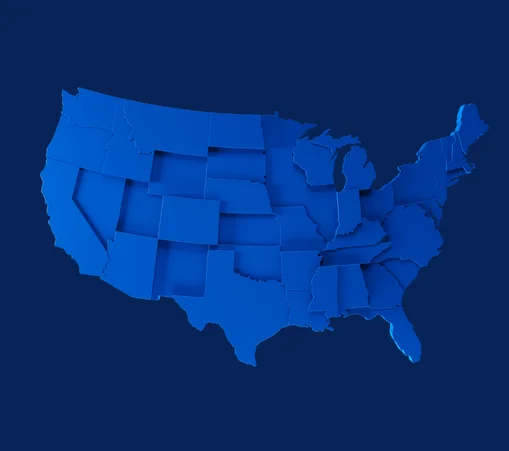
Billing rules are not national. They are local. Medicaid in Texas is different from Medicaid in California. Commercial payers have different prior auth rules for biologics in Florida vs New York.
We provide Medical Billing Services for Dermatology Practices in All 50 States and stay current on regional differences.
This includes state Medicaid and managed care plan rules, regional commercial payer policies on biologics and step therapy, and multi state teledermatology regulations. For telehealth, Medicare typically uses POS 11 with modifier 95, but many commercial payers require POS 10 or POS 02. Getting this wrong is one of the top three reasons dermatology claims are rejected.
We also monitor regional fee schedules so your charges stay competitive in your market. If you need billing support in a specific state, we can help.
Dermatology Services across 50 states

Dermatology Provider Enrollment and Credentialing Services

For a new dermatologist, PA, or NP, delays can mean months of lost revenue. Our enrollment team manages the entire process so you can start billing as soon as possible.
We handle Medicare enrollment through PECOS, state Medicaid enrollment, and commercial panel applications. We also review payer contracts to make sure the terms make sense for your practice. CAQH profiles are set up and attested quarterly so nothing lapses.
We manage both group and individual enrollment, and the reassignment of benefits. When you add new providers, we handle the paperwork. We also track re-credentialing and revalidation dates so you do not get dropped from a panel unexpectedly.
Most importantly, we tell you up front how long credentialing takes and what typically causes delays. No surprises.

Medical Billing for Dermatology Across Every Practice Setting

A solo practitioner has different needs than a 20-provider group. A Mohs surgeon bills differently than a cosmetic practice. We adjust our service to fit your model.
We work with:
Whether you are 100% medical or a mix of medical and cosmetic, we build workflows that keep the two separate and compliant.
Medical Billing for Dermatology Across Every Practice Setting (1)

What Outsourced Dermatology Billing Services Cost and How Onboarding Works

Cost should be clear and fair. We offer two pricing models: a percentage of collections or a flat monthly fee. We will explain what is included and what is billed separately before you sign anything.
If you are looking for an Affordable Dermatology Medical Billing Company, we focus on ROI. Our fee should be less than the additional revenue we recover for you.
Here Is How Onboarding Works Week by Week
Week 1
We get system access, map your current workflow, and review your top payers and denial trends.
Clearinghouse and ERA/EFT setup is completed. We begin coding and submitting your first batch of claims.
A/R analysis starts. We identify aged claims and begin working them. Denial appeals are filed.
Your reporting dashboard goes live. You see your first payment cycle under our management.
To get started, we need access to your practice management system, a list of your providers and payers, and your last 90 days of remits. Contract terms are straightforward and we will explain how to leave if you are not happy. We believe Outsourced Dermatology Billing Services in the USA should be a partnership, not a trap.

Why Practices Choose SwiftCare Billing as Their Dermatology Billing Company in the USA

There are hundreds of billing companies. Here is why dermatologists choose us.

First, our coders specialize in dermatology. They code biopsy, excision, and Mohs claims every single day. They know the 2019 biopsy code changes and how to document for G2211.

Second, we have a dedicated prior authorization team for biologics and phototherapy. With denial rates over 50%, this cannot be an afterthought.

Third, we work appeals to resolution. Too many billers write off denials. We fight them.

Fourth, you get a named billing contact. You are not calling a ticket queue. You call a person who knows your practice.

Fifth, we are HIPAA compliant and keep audit-ready documentation.

And finally, you get reporting you can actually use. Log in any day and see your numbers.

This is what makes us the Best Dermatology Billing Services for Medical Practices that want real results.

Dermatology Revenue Cycle Management: What Changes in the First 90 Days

The first 90 days are about quick wins and long-term fixes.
We start with a baseline audit of your last 90 days of claims and remits. This tells us where the money is being lost right now. Then we begin cleaning up aged A/R. Old claims are worked aggressively.
During this time we also set up your reporting. You will see metrics like clean claim rate, days in A/R, denial rate by reason, and net collections.
By day 90, most practices see measurable improvement. Claims are going out cleaner, denials are down, and cash is coming in faster. We will share specific numbers and a client story once we have permission from operations.
Dermatology Revenue Cycle Management What Changes in the First 90 Days

Ready to Turn Your Revenue
Cycle Into a Growth Engine? Let’s talk!

Have Questions?
Let’s Discuss

Fill out this form, tell us about your practice’s unique needs, and get a tailored solution!
Contact Us Form

Frequently asked questions

What CPT codes do dermatologists bill most often?
Dermatologists most often bill E/M codes 99202 through 99215, biopsy codes 11102 through 11107, destruction and excision codes from the 11400 to 11646 range, and Mohs micrographic surgery codes 17311 through 17315. Add-on codes like G2211 are also used when documentation supports longitudinal care.
A shave or tangential biopsy is reported with 11102 for the first lesion and 11103 for each additional lesion. A punch biopsy uses 11104 for the first and 11105 for each additional. The code is determined by the technique used, not by the size of the lesion or the diagnosis.
Modifier 25 is used when a patient receives a significant and separately identifiable evaluation and management service on the same day as a procedure. Payers are scrutinizing it more in 2026 because it was often overused. The documentation must prove that the E/M work was separate from the procedure.
Yes, if the medical record supports it. The provider must document an E/M service that goes beyond the work of deciding to do the biopsy. Modifier 25 is appended to the E/M code in that situation.
What is the JW and JZ modifier requirement for biologic claims?
The JW modifier reports the amount of drug discarded from a single-use vial. The JZ modifier attests that there was no discarded amount. For biologics and skin substitutes, payers now require one of these on every claim. Missing them can lead to denial and audit risk.
The separation has to start at scheduling. Staff should be trained to ask if the visit is medical or cosmetic. In the EHR, cosmetic encounters should be flagged so they are never sent to insurance. Billing staff should also double-check before submission.
Denials usually happen because of incomplete clinical documentation, failure to meet step therapy requirements, or missing lab results. In 2026, reported denial rates for biologics and JAK inhibitors were around 51%. A dedicated workflow with daily follow-up helps reduce this.
Medicare continues to cover teledermatology. The most common billing is POS 11 with modifier 95. However, many commercial payers require POS 10 for home or POS 02 for other telehealth locations. Using the wrong POS code is a common reason for rejection.