



In podiatry, common prior authorization problems consume your resources and slow down therapy. However, you may expedite the healing process and get back on your feet if you know what traps to avoid. In this article, we analyze typical prior authorization problems in podiatry and provide practical solutions.
Prior Authorization: What Is It?
Obtaining insurer approval before to administering specific treatments or services is known as prior authorization. This causes a bottleneck for podiatry practices. Before prescribing bespoke orthotics or performing an MRI for an ankle injury, clearance is required. This implies that you will have to handle waiting, phone calls, and paperwork.
Patients suffer when prior authorization is denied or delayed. Their condition worsens and their agony persists. Staff will spend hours pursuing permissions, which will result in your clinic losing money.
See our podiatry services to avoid losing money.
The Most Typical Issues with Prior Authorization
- Inaccurate or Missing Information
- Details are important to insurance firms. A denial may result from any missing letter in a diagnostic code.
- Incorrect patient information
- Inadequate medical documentation
- Problems arise from vague treatment descriptions.
The lack of clinical explanation in the paperwork causes many podiatry prior authorization requests to be denied.
Uncertain Medical Requirement
Here, a lot of practices falter, which proof that your treatment is medically necessary—rather than merely beneficial or preferred— and is required by the insurance company.
For instance, you treat a patient who requires bespoke orthotics due to severe plantar fasciitis. The claim will be rejected if your notes do not demonstrate that conservative therapy failed first. Record each step:
- The thorough justification for the rejection.
- Physical therapy endeavours
- Injection experiments
Using Previous Guidelines
Policies for insurance are always changing. What was successful a year ago might not work today. Using out-of-date criteria or forms is the root cause of many prior authorization problems in podiatry. You will be repeatedly rejected if your team doesn’t stay up to date.
Incorrect Procedure Codes
In podiatry, medical coding can be challenging. Different codes apply to similar procedures, and selecting the incorrect code ensures a denial.
For example, the CPT codes for bunion surgery vary based on the procedure. In addition to delaying authorization, billing for the incorrect code may raise suspicions about your practice.
Unfinished Medical History
The whole narrative is what insurers desire. They must examine the treatments you have already tried and the reasons for their failure. Expect pushback if your previous authorization request skips the trip and goes directly to advanced care. For instance, when caring for diabetic patients’ wounds, you have to record
- Measurements of wounds
- Status of infection
- Vascular evaluations
- Every prior therapy
- Denial is encouraged by anything less.
How These Problems Affect Your Practice
Particularly in the medical field, time is money. Your staff is unable to concentrate on patient care when they spend hours on pre authorization activities. Treatments and payments are delayed as a result of delayed authorization. While you wait for insurance decisions, your cash flow is negatively impacted. Additionally, patient satisfaction declines. When their doctor indicates they need care, they don’t understand why they can’t obtain it. They become irritated and occasionally place the responsibility on your practice rather than the insurance provider.
When the authentication process takes too lengthy, some patients give up. They neglect crucial therapies, which may have detrimental effects. Additionally, this puts your practice at risk for liability.
Clever Ways to Resolve Previous Authorization Problems
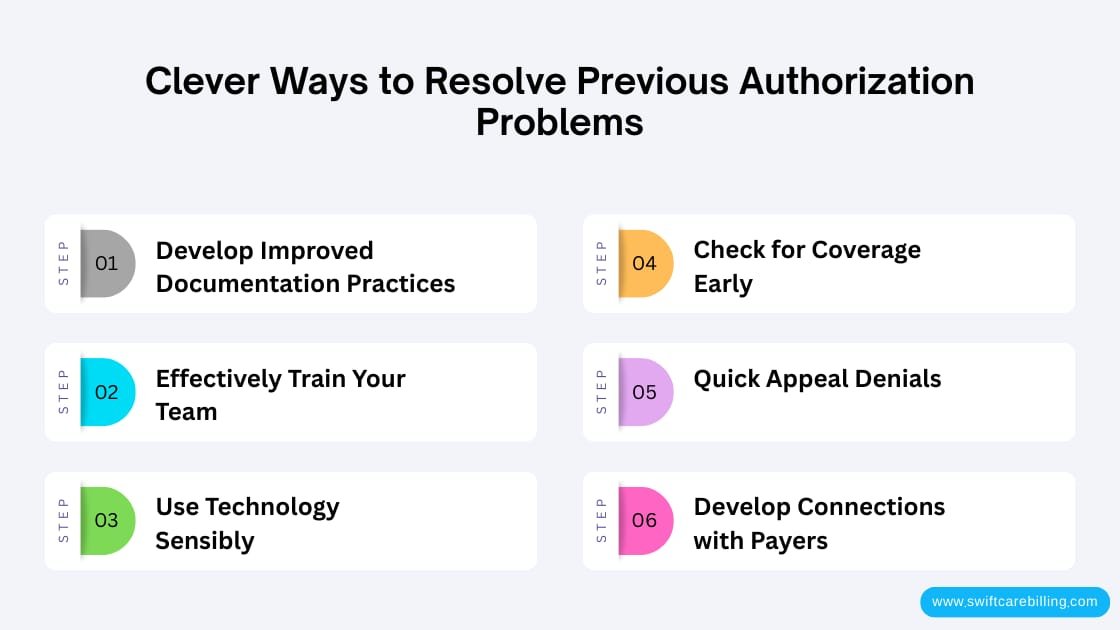
Develop Improved Documentation Practices
Your best line of defence against denials is a strong clinical note. Make templates that ask providers to supply all the information that insurers usually ask for.
Effectively Train Your Team
Ongoing training regarding previous authorization needs is necessary for your billing and front office employees. They ought to be aware of which services require authorization and how to identify possible issues prior to submission.
Use Technology Sensibly
Parts of the previous authorization workflow can be automated by contemporary practice management systems. Request submission is made simpler by the integration of certain electronic health record systems with insurance portals.
Check for Coverage Early
Verify whether anything requires prior authorization before the day of service. While making appointments, confirm coverage.
Quick Appeal Denials
Don’t simply accept a denied authorization. Examine the denial explanation thoroughly, and then swiftly reply with more details.
Develop Connections with Payers
Learn about the medical directors and case managers at large insurance firms. Some insurers can assist you through hotlines or representatives.
Conclusion
You don’t have to let common prior authorization problems in podiatry dictate your practice. Indeed, the procedure is time-consuming and frustrating. However, you may minimize all of the typical mistakes with the appropriate procedures and tactics.
If handling medical invoicing and prior authorizations is too much for your podiatry practice. Get in touch with SwiftCare Billing right now. We can permanently resolve your prior authorization problems and streamline your revenue cycle. We assist healthcare professionals in handling claims and insurance authorizations.